
Black Friday Shopping Scams: 8 Ways to Stay Safe While Shopping Online
Last Updated on November 17, 2026 by chada sravas
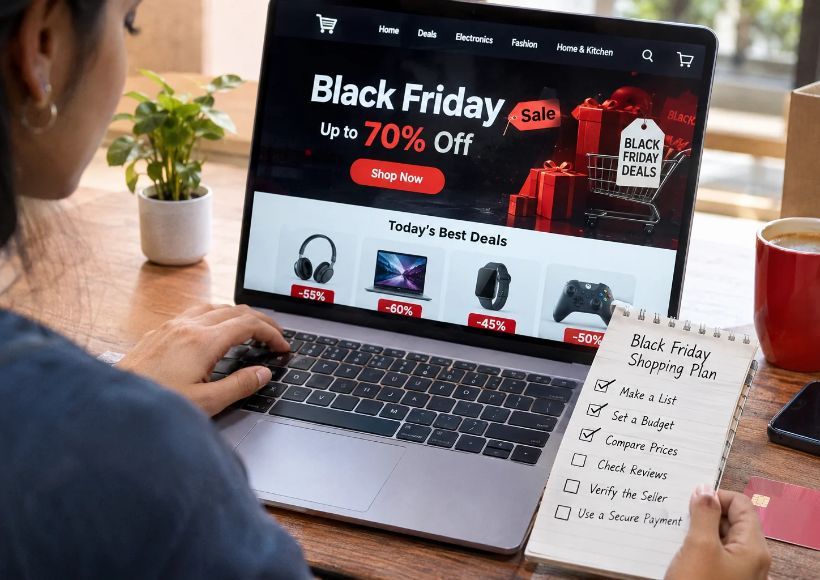
Black Friday not only offers real deals, but also offers an opportunity for scammers. During the shopping season, scam ads, fake stores, phishing messages, and fake clarifications increase as buyers become too eager to acquire special offers. The good part is that most scam types are predictable. Below is a description of some scam types, as well as a list of tips that will help Chloe take precautions against them.
1. Fake Shopping Websites
The scam: Scammers build websites that copy popular shopping platforms and advertise expensive products at unbelievably low prices. They take your payment and send nothing, or send a counterfeit.
How to protect yourself:
- Read the domain name letter by letter. Lookalikes such as amaz0n-deals.shop or flipkart-sale-offers.com use small spelling changes, extra words or unusual endings.
- Look for a valid business address, working contact details, and clear shipping, return and refund policies.
- Check that branding and product details are consistent across the site.
- Never buy from an unfamiliar site just because a countdown timer says the offer is about to end.
2. Suspicious Deals in Ads and Emails
Advertisers use real brand names, stolen product images and big deals on social networking platforms, search engines and promotional mails. Once you click on an advertisement you will be sent to a fake website that has been designed to gather your personal and financial information.
How to protect yourself:
- Confirm the seller is an official retailer or authorised store.
- Go to the retailer’s website directly by typing the address or using its official app, instead of following unfamiliar links.
- Be wary of messages claiming a deal expires in minutes.
- Walk away from any offer that asks for personal information before you can even see the product.
3. A familiar logo does not make an ad genuine.
Emails and text messages tell you that you have won a contest, redeemed a special discount, or need to confirm your payment or pay a tiny “redelivery fee”. The links lead to phony payment pages or login pages.
How to protect yourself:
- Do not click links in unexpected messages. Check order status in the retailer’s official app or website, or through the delivery partner’s app.
- Never share passwords, OTPs, card PINs or banking credentials through a link or in reply to a message.
- Remember that genuine companies do not ask for your OTP or PIN over call, SMS or chat.
4. Fake Reviews and Fake Sellers
The scam: Fraudulent stores publish copied or invented reviews, or show only glowing feedback, to look trustworthy.
How to verify a seller:
- Search the store’s name along with words like “scam,” “fraud,” “complaint” or “refund.”
- Read reviews on independent platforms, not just the testimonials on the seller’s own site.
- Look for detailed reviews from verified buyers, customer photos, and recent feedback.
- Treat identical wording across many reviews as a red flag.
- Pay special attention to negative reviews about payment problems, counterfeit goods or refunds that never arrived.
- Check how old the domain is using a free WHOIS lookup. A shop that claims to be established but whose website was registered a few weeks ago is suspicious.
5. Fake Customer Support Numbers
The scam: Following an issue with your inventory, you locate the company’s help center and proceed to dial a contact you discover via an online inquiry, a social media remark or a promotional post. You then get informed by the “agent” that you are required to provide an OTP number, download a screen-sharing program or make a “refund” payment.
How to protect yourself:
- Get support numbers only from the retailer’s official website or app.
- Never install a remote-access app because a support agent asks you to.
- Remember that a refund never requires you to enter a PIN or approve a payment request.
6. Protect Your Personal and Payment Details
Online shopping means sharing some information, so share only what is needed to complete the purchase.
- Check that the address begins with HTTPS, but remember that HTTPS alone does not prove a site is genuine. Scam sites use it too.
- Never share your OTP, UPI PIN or card PIN with anyone, for any reason.
- Avoid saving card details on unfamiliar websites.
- Use a unique password for each shopping account, ideally with a password manager, and turn on two-factor authentication where available.
- Keep your phone, browser and apps updated.
- Enable transaction alerts from your bank, and contact your bank immediately if you see a payment you did not make.
7. Choose Safer Payment Methods
How you pay decides how much help you can get if something goes wrong.
- Credit cards generally offer the strongest dispute and chargeback options, though protection depends on the issuer’s terms.
- Virtual or single-use cards, or a card with a low spending limit, are a smart choice for sellers you do not know well.
- UPI payments are fast, but recovering money is harder once you approve. Verify the recipient’s name and details before you pay, and remember that you only enter your UPI PIN to send money, never to receive it.
- Direct bank transfers to unknown sellers offer the weakest recourse. Avoid them, especially when the discount looks too good to be true.
- Be cautious if a seller pushes you to pay outside the platform or website where you found them, or offers a “cash on delivery” deal that suddenly changes into a prepayment request.
8. Plan Ahead and Set a Budget
Scammers use a sense of urgency: countdown timers, “only X left in stock” messages, and flash sale advertisements are there to make you act before thinking it through. Planning ahead removes this pressure.
- Make a list of products you actually need.
- Set a spending limit.
- Research sellers and product specifications in advance.
- Compare prices across a few trusted retailers.
- Do not buy something only because it is heavily discounted.
A planned purchase gives you time to verify the seller instead of deciding in a panic.
Wondering which sales are genuine in 2023? Look to Black Friday in India 2026 to get details on dates, discounts and sale news that stores have released, and consult Black Friday vs Cyber Monday to evaluate prices and choose one for your purchases.
If You Have Been Scammed
Act quickly. The first hours matter most.
- Contact your bank or card issuer immediately to block the card or UPI ID and report the unauthorised transaction.
- Report it to the cybercrime helpline 1930, or file a complaint at cybercrime.gov.in. Reporting fast improves the chances of freezing the money.
- Save evidence: screenshots of the website, messages, payment receipts and transaction IDs.
- Change passwords on any account where you shared or reused login details.
- Report the fake site or ad to the platform where you saw it, so others are protected.
A genuine deal is already a deal after you spend just a couple of minutes verifying your seller. If an offer fills you with worry or rush, then this is already a sign of skepticism. Take it easy, check it out, and purchase with confidence this Black Friday.
Also Read : Is Walmart Open On Thanksgiving?
