
How to Have a Low-Waste Christmas Without Buying New Decorations
Last Updated on November 22, 2026 by chada sravas
The major sources of waste during the Christmas festivities are single-use gift wrap and plastic decorations, excessive packaging of products, single-use cookware, and food waste. Many people still purchase more decorative items and wrapping paper even though they already own reusable items.
A Christmas that generates less waste does not mean spending a lot of money on environmentally friendly things or refraining from festivities. It simply means that you should make use of things you already own, opt for reusable materials, and generally aim to reduce the amount of garbage you dispose of. It is possible to make your living space more festive without having to buy a new batch of decorations.
Before Christmas: Plan Before You Buy
Check Your Existing Decorations First
Before buying Christmas decorations, open your storage boxes and check what you already have. There are often old ornaments, wreaths, ribbons, fairy lights, gift bags, and table decorations that can be reused.
A common mistake is buying new decorations marketed as eco-friendly every year. But even green materials consume resources for their production and transportation. Therefore, reusing an old decoration usually makes more sense than buying a new one.
If you have decorations you no longer need, organize a small exchange with friends or family. You can also donate usable items to community groups, schools, or local charities.
Plan Gifts with Less Packaging
Gift shopping can create unnecessary waste when every product comes with multiple layers of plastic, cardboard, and decorative packaging.
Before purchasing, consider whether the recipient will actually use the gift. Choose durable products, locally made items, or experiences instead of disposable novelty gifts. When comparing similar products, consider packaging as well as price and quality.
For example, a reusable coffee cup or water bottle can be a more practical gift than a decorative item that may only be used once.
If you are buying multiple gifts, prefer suppliers who use less packaging or allow you to skip extra gift wrapping.
You can also explore these ways to save money on Christmas gifts to plan your holiday shopping budget and avoid unnecessary purchases.
During Christmas: Decorate and Wrap with Less Waste
Create Natural Christmas Decorations
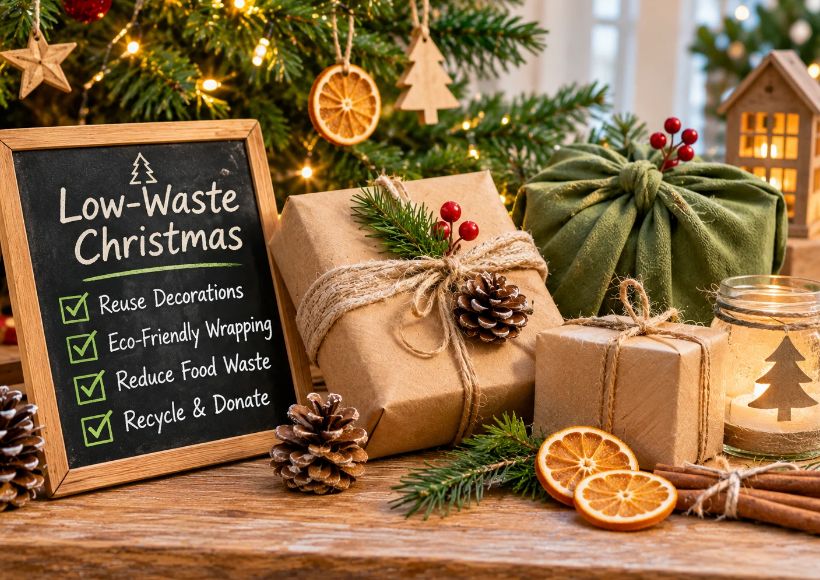
Natural decorations work best when you use materials you already have or can collect responsibly. Pinecones, dried orange slices, cinnamon sticks, and fallen branches can create a festive look without buying plastic ornaments.
Making a simple orange garland is easy. Slice an orange into thin slices and dry them in the oven at a low temperature. Once they are cooked, let them cool down and string them together with cotton thread. Adding some cinnamon sticks or dried plants gives a more natural look.
You can put pinecones and tree branches into a bowl or use them in a centerpiece. When doing so, make sure not to add glitter, plastic covering, or any decoration that cannot decompose.
Use Christmas Lights More Efficiently
There is no need to throw away all of your Christmas lights in favour of LED lights. Use your current Christmas lights until they fail, and only then look for LED alternatives.
The bigger improvement often comes from reducing unnecessary operating time. For example, if decorative lights are switched on for six hours daily over 20 days, they run for 120 hours in total. A timer can prevent them from staying on overnight or when nobody is home.
When buying replacements, consider LED lighting, use timers as much as possible, and turn off the lights when you no longer need them. For outdoor spaces, solar lighting can be an option if sunlight is available.
Replace Disposable Gift Wrapping with Reusable Options
Shiny wrapping papers can have coatings made from plastic, metal, or glitter, which defeat the purpose of recycling. Kraft paper, old newspapers, or fabric make good replacements.
The easiest way to wrap a present is to place the gift in the center of a cloth, gather the corners together, and tie them with a piece of fabric. A suitable cloth can be an old scarf or any fabric at home.
When wrapping, opt for twine or ribbon that can be reused many times instead of materials that only end up as useless plastic decorations. One cloth bag can substitute for wrapping paper at several birthday and Christmas celebrations and can be reused for future occasions.
Save wrapping paper and gift bags if they are still intact after opening. Keep them flat and store them for the next event.
Make DIY Decorations Without Buying Extra Supplies
DIY decor is beneficial as long as you use crafting supplies you already possess. If you have to buy new craft supplies to make a single decoration, it adds to the cost and waste.
Try these simple projects:
Glass jar candle holder: Clean an empty glass jar, place a suitable candle holder or battery-operated candle inside, and decorate the outside with reusable twine.
Cardboard Christmas stars: Cut stars from clean cardboard packaging, decorate them with leftover paper, and make a small hole to hang them.
Paper garland: Cut shapes from leftover paper, join them with string, and use the garland again if it remains in good condition.
Instead of making a new decoration every year, make sure to store these decorations properly after Christmas.
Set Up a Reusable Christmas Dining Table
Christmas celebrations generate waste because of the use of disposable cups, plates, cutlery, and napkins. Use normal plates, glasses, and cutlery to minimize waste.
You can dress up your table using cloth napkins, reusable tablecloths, candles, and décor made out of natural items. For example, you can create a festive arrangement using dried orange slices, branches, or pine cones.
Food planning is equally important. Estimate portions based on the number of guests and the dishes being served. Avoid preparing large quantities simply because it is a special occasion.
If food remains, divide it into suitable containers, refrigerate it promptly, and share extra portions with guests or neighbours when appropriate. Do not leave perishable food at room temperature for extended periods.
After Christmas: Reduce Waste and Prepare for Next Year
Sort Christmas Waste Before Disposal
A substantial part of the waste generated at Christmas cannot be directly recycled for secondary use. Not every item can be recycled correctly with ordinary paper. Items made from laminated paper, plastics, and foil wrappers are not usually processed with paper recycling.
Waste in India can be managed by separating dry waste, wet waste, and special waste with the help of local authorities. Cardboard and recyclable paper can be managed by local dry waste collectors.
If you are unable to identify a material, you should check with your local council for waste separation rules or contact the local garbage collector before throwing it away. It is best to keep batteries and broken electrical items separate from household trash and use the appropriate collection point for them.
Store, Donate, or Exchange Decorations
Once the Christmas season finishes, determine whether any decorations are in good enough condition to keep before disposing of any. Organize decorations into three categories: decorations to put away in storage, decorations to donate or exchange, and decorations that cannot be repaired.
Before putting the reusable ornaments away, make sure they are clean and dry. Wrap any glass ornaments in newspaper or cloth, and store the lights, untangled, in labeled boxes.
Gift bags, ribbons, fabric wrap, and table décor can be stored and reused to decorate for future celebrations. If you have working decorations that you have no use for, consider donating or swapping them instead of buying new ones the following year.
Quick Low-Waste Christmas Action Plan
Before Christmas
- Check existing decorations before shopping.
- Plan gifts and avoid unnecessary packaging.
- Prepare a realistic food and guest list.
During Christmas
- Use natural or reusable decorations.
- Wrap gifts with fabric or recyclable paper.
- Use reusable dining accessories and manage food portions.
After Christmas
- Separate waste according to local recycling rules.
- Store usable decorations and wrapping materials.
- Donate or exchange items you no longer need.
Also Read : Best Gift for IT Guy India – 9 Practical Gifts Tech Professionals Love
