
Smart Gadgets: Best Smart Devices for Home, Work & Daily Life
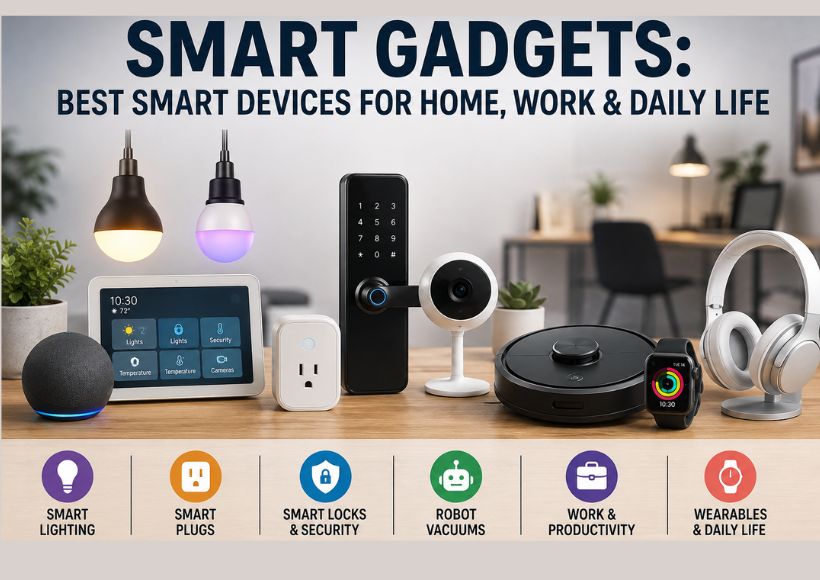
Last Updated on August 14, 2026 by chada sravas
Smart technology is most useful when it removes small frustrations from your routine. Instead of adding another app or device to manage, the right gadget can automate repetitive tasks, save time, and make your home or workspace more efficient.
From lights that respond to motion to smart plugs that control ordinary appliances, today’s devices can handle many everyday tasks with minimal input. The same idea applies outside the home: smartwatches can reduce phone checks, while item trackers can help locate misplaced belongings.
This guide covers practical smart home gadgets, useful work technology, daily-use devices, and the key things to consider before buying.
Best Smart Devices for Home Automation
Smart Lighting: Bulbs, Switches and Sensors
Smart lighting is one of the easiest ways to start smart home automation. Smart bulbs are useful when you want brightness or color controls, while smart switches can make existing lights controllable without replacing every bulb.
The real benefit comes from automation. Motion sensors can turn lights on when someone enters a room, while schedules can adjust lighting based on the time of day.
For example, you might automatically turn hallway lights on at night and switch them off after a period of inactivity. This reduces the need to repeatedly reach for a switch while making lighting more consistent.
Smart Plugs: Upgrade Ordinary Appliances
A smart plug can turn a conventional appliance into a connected device without replacing it. Lamps, fans, coffee makers, and other compatible appliances can be scheduled or controlled remotely.
Some smart plugs also provide energy monitoring, allowing you to see how much electricity a connected appliance consumes. This can help identify energy-heavy devices and, in some cases, use power consumption as a trigger for automation. Smart monitoring also works alongside basic maintenance habits to keep your home appliances running smoothly longer.
For beginners, smart plugs are a practical starting point because installation is generally simple and they can be moved between compatible devices.
Smart Locks and Home Security
Smart locks focus on one of the most common daily hassles: managing keys.
Depending on the model, you may be able to unlock a door using a smartphone, PIN, fingerprint, or another supported method. Temporary access codes can also be useful when family members, guests, or service providers need entry without receiving a physical key.
Video doorbells can complement smart locks by providing remote notifications and allowing you to see who is at the door.
Security should remain the priority, though. Before purchasing a connected lock or security device, check its authentication options, battery backup, software support, and account security.
Robot Vacuums: Automate Routine Cleaning
Robot vacuums are useful because they automate a repetitive household chore rather than simply adding another way to control an appliance.
You can schedule cleaning while you’re working or away. Higher-end models may add mapping, mopping, automatic dust collection, and other features that reduce how often you need to intervene.
The best model isn’t necessarily the one with the longest feature list. Look at how well it handles your floors, furniture, pets, and cleaning routine.
Smart Gadgets for Work & Productivity
A smart workspace should reduce friction rather than create more distractions. The right work productivity tech can keep devices charged, improve focus, and make remote work more comfortable.
Build a Smarter Desk Setup
A practical setup might include a wireless charging hub, noise-canceling headset, and adjustable desk lamp.
A charging hub can reduce cable clutter and keep your phone, earbuds, and other devices ready for use. Noise cancellation can help create a quieter environment for meetings or concentrated work.
If you’re choosing headphones specifically for work, our guide to choosing the right headphones for great audio quality can help you compare the factors that matter for everyday listening and calls.
Smart lighting can also help maintain consistent workspace illumination without requiring constant manual adjustments.
Focus Timers and Digital Notes
A dedicated focus timer can divide work into concentrated sessions and planned breaks without requiring you to check your phone.
Smart or digital notebooks are useful for people who prefer handwriting but want their notes available digitally. They can fit naturally into meetings, brainstorming sessions, study routines, and project planning.
The goal isn’t to make every part of your desk “smart.” It’s to eliminate small interruptions that repeatedly break your workflow.
Smart Devices for Daily Life & On-the-Go
Some of the most useful daily smart gadgets are small enough to carry with you. They can reduce unnecessary phone checks, encourage useful habits, or help you find things you’ve misplaced.
Smartwatches
A smartwatch combines notifications, reminders, activity tracking, calls, and other features on your wrist. For many people, the biggest advantage is being able to check important information without constantly reaching for a smartphone.
Fitness-focused models can also track workouts, movement, sleep, and other metrics, depending on the device.
If you’re considering a Galaxy Watch, you can explore our guide to Samsung Galaxy Watches, including features and comparisons for more information.
Smart Item Finders
Item trackers are small devices designed to help locate frequently misplaced belongings such as keys, bags, wallets, or luggage.
Their value is straightforward: instead of spending several minutes searching for something, you can use the associated tracking system to help locate it.
For frequent travelers, attaching a tracker to luggage can also provide additional peace of mind.
Quick Buyer’s Guide
Before buying the best smart devices 2026 has to offer, consider how each product will fit into your existing setup.
Ecosystem: Check compatibility with Amazon Alexa, Google Home, Apple Home, or Matter. Choosing compatible devices from the beginning can make future automation easier.
Connectivity: Wi-Fi devices are convenient for smaller setups. Zigbee and other smart-home protocols can become useful when you’re building a larger network of connected devices.
Setup: Look for reliable apps, straightforward installation, and easy-to-create routines. A complicated device can undermine the convenience you’re trying to achieve.
Privacy: Review account security, software updates, data collection, and cloud requirements before purchasing cameras, microphones, locks, or other sensitive devices.
Physical controls: Don’t remove every traditional control. Physical switches and manual options can still be useful for family members, guests, or situations when connectivity isn’t available.
Device care: Smart gadgets still need maintenance. Keep software updated, monitor batteries, clean sensors where necessary, and protect devices from avoidable damage. For smartphone-related maintenance, see our guide on how to avoid needing smartphone repair.
Conclusion
Smart gadgets are most useful when they make everyday tasks easier, save time, or reduce unnecessary effort. Start with one device that solves a real problem, such as smart lighting, a smart plug, a smartwatch, or an item tracker, and expand your setup as needed.
Frequently Asked Questions
What are the best smart gadgets for beginners?
Start with smart plugs, smart lights, motion sensors, or a smart speaker. These devices can demonstrate the benefits of automation without requiring a complicated setup.
Do all smart devices work together?
No. Compatibility depends on the ecosystem, connectivity technology, manufacturer support, and standards such as Matter. Always check compatibility before buying, especially if you plan to combine products from different brands.
