
What Does Mortgage Insurance Cover?
Last Updated on October 10, 2026 by chada sravas
In this article, we will explore what losses mortgage insurance covers, when the insurance claim arises, and what protections the borrower does not have.
What Mortgage Insurance Covers When a Borrower Defaults
Mortgage insurance may cover eligible financial losses a lender experiences when a borrower fails to repay a home loan. The exact coverage depends on the insurance policy and mortgage program.
For example, imagine a borrower owes $240,000 on a home loan but can no longer make the required payments. The lender begins foreclosure proceedings and eventually sells the property. If the sale proceeds are insufficient to recover the outstanding debt and eligible costs, the lender may experience a financial loss.
In case of a loan with coverage of mortgage insurance, the insurer will reimburse the lender for the loss (losses) covered by the insurance policy. The insurance does not automatically pay the whole amount of the mortgage owed, and the amount of payment is largely dependent on the coverage and the conditions of the loss claim.
Who Receives the Insurance Benefit?
Through traditional Private Mortgage Insurance (PMI) and FHA mortgage insurance, coverage is principally for the lender or relevant insured entity and not for any money that is received directly by the borrower.
In case of default by the borrower, the lender proceeds with the collection and foreclosure process. In the event of a loss that is covered, the lender can submit the insurance claim. The insurer assesses such a claim pursuant to the provisions of the contract.
This distinction matters because paying mortgage insurance premiums does not mean the borrower can ask the insurer to pay their monthly instalments when they experience financial difficulties. PMI is designed to protect against specified lender losses, not to provide personal income replacement.
What Mortgage Insurance Does Not Cover
The homeowner’s mortgage and the owner’s insurance are two different things and should not be mistaken for each other. In many cases, mortgage insurance is necessary for obtaining a mortgage.
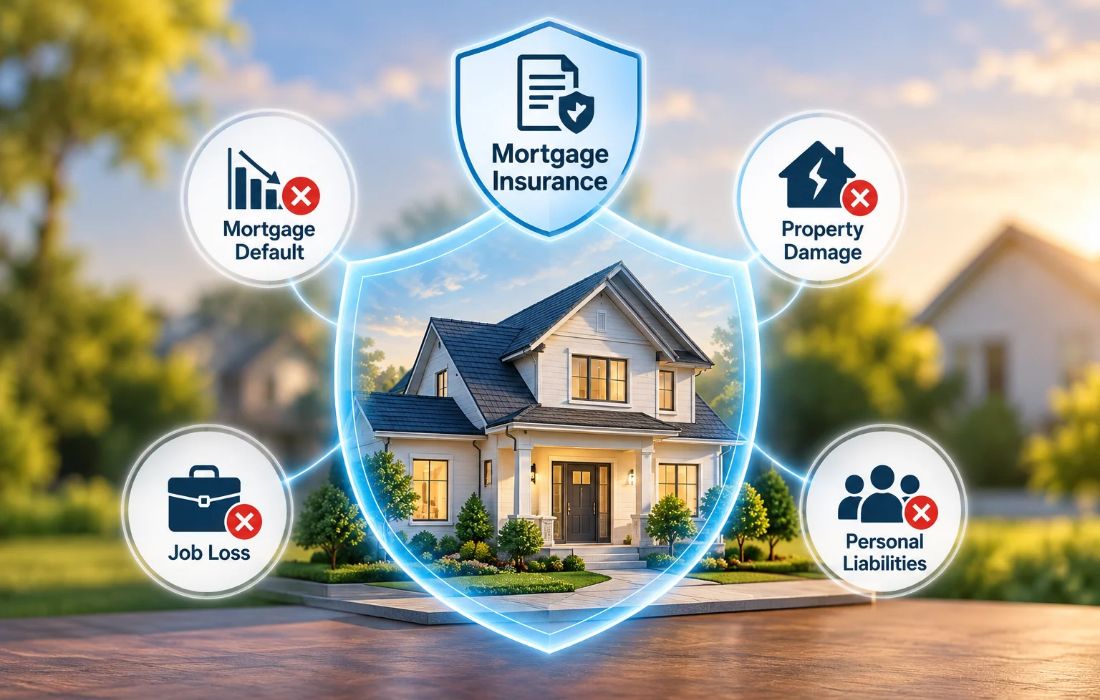
Job loss: PMI does not generally pay your mortgage instalments simply because you become unemployed.
Illness or disability: Standard PMI does not provide disability benefits or replace lost income.
Property damage: Damage caused by events such as fire or storms is generally addressed by homeowners insurance, subject to its coverage and exclusions.
Personal belongings: PMI does not reimburse you for damaged or stolen furniture, electronics or other possessions.
Automatic debt forgiveness: Having mortgage insurance does not automatically erase your mortgage debt if you default.
The types of coverage that insure these events must be bought separately from mortgage insurance. The policy covers only what is stated in its wording.
Does Mortgage Insurance Cover Death or Disability?
This varies based on the type of insurance. Traditional PMI and FHA mortgage insurance essentially act only to shield the lender from losses arising from the mortgage. They are not life insurance or disability insurance.
Mortgage protection life insurance works differently. A policy may offer a benefit to the mortgage upon the insured’s passing. Some of these distinct policies may pay benefits due to certain disabilities or other covered events.
For instance, in the event of the death of a policyholder while having mortgage life insurance, the insurance company shall pay the benefit according to the terms of the agreement to the beneficiary or the nominated recipient of the funds. However, it would be wrong to take it for granted that a typical mortgage insurance policy protects you from losses in such an event.
Does Mortgage Insurance Pay Off the Entire Loan After Default?
Not necessarily. Mortgage insurance is designed to cover eligible losses under the applicable policy, rather than automatically paying the full original loan amount in every default situation.
The claim calculation can depend on the remaining debt, proceeds from the property’s sale, eligible expenses, policy limits and other contractual conditions. The insurer may pay only the covered portion of the lender’s loss.
The key thing that borrowers need to remember is that getting mortgage insurance does not mean that there are no financial repercussions in the event of their failure to repay the loan. The borrower risks losing the property, and what more is owed by the borrower is dependent on the contract and the law.
Do You Get Mortgage Insurance Premiums Back If You Never Default?
As a general rule, borrowers should not think that they will get back all their PMI premium payments just because they pay off their mortgage without defaulting. PMI premiums are meant to fund an insurance policy during the time the policy is in effect.
In general, borrowers should not assume that they would receive all their PMI premium payments refunded merely for paying their mortgage. PMI premiums are intended to pay an insurance policy throughout the period when the policy is active.
Mortgage Insurance vs. Homeowners Insurance Coverage
|
Coverage |
Mortgage Insurance |
Homeowners Insurance |
|
Protects against |
Specified lender losses from mortgage default |
Covered property damage and certain liability claims |
|
Primary beneficiary |
Lender or insured party under the policy |
Depends on the claim and policy; the homeowner is commonly protected |
|
Pays for fire damage to the house |
No |
May cover it if the event is covered |
|
Pays mortgage instalments after job loss |
No, not under standard PMI |
Generally no |
|
Protects the lender against a covered mortgage loss |
Yes |
Not its primary purpose |
Homeowners insurance and mortgage insurance serve different purposes. A borrower may need both, depending on the mortgage agreement and lender requirements.
