
Putlocker Is Gone—So Why Do Millions Still Search for It?
Last Updated on July 15, 2026 by chada sravas
Why millions of people still search for Putlocker years after its disappearance—and what the streaming industry can learn from it.
Introduction
Search for “Putlocker” today, and you’ll see something interesting. Most results warn you about fake websites, malware, copyright issues, or recommend legal alternatives like Netflix, Tubi, or Pluto TV. While those warnings are important, they miss a much bigger question:
Why do people still search for Putlocker after so many years?
The answer isn’t simply “because people want free movies.”
If that were true, interest would have disappeared long ago. Instead, the Putlocker name continues to generate searches because it represents something many modern streaming platforms still struggle to provide—a simple, fast, and frictionless way to find content.
Long before the streaming wars divided movies across dozens of subscription services, Putlocker offered something users valued more than almost anything else: convenience.
Understanding why Putlocker became so popular isn’t just a story about piracy. It’s also a lesson in user experience, digital behavior, and how people consume entertainment online.
Putlocker Was Never Just About Free Movies
Most articles describe Putlocker as a piracy website. Technically, that’s true, but it doesn’t explain why millions of people kept returning.
Imagine someone trying to watch a movie today.
First, they search on Google. Google shows Netflix, but the movie isn’t available there. Next, they check Prime Video and Disney+ Hotstar, but it’s still unavailable on both. They continue searching across other OTT platforms, but still can’t find it.
Finally, they search on JustWatch and discover that the movie is available—but only in another country.
The experience is frustrating.
Years ago, many users felt Putlocker solved this discovery problem. Instead of searching across multiple services, they searched in one place. Whether someone agrees with the legality or not, this convenience explains why the platform became memorable. People often remember the experience more than the website itself.
The Real Problem Wasn’t Price
One common assumption is that users chose Putlocker because they didn’t want to pay. Reality is more complicated. Many discussions across forums over the years reveal a different pattern.
People frequently paid for Netflix, Prime Video, or Disney+, yet still searched for Putlocker.
Why?
Because licensing creates fragmentation.
A TV show might exist on one platform in the United States, another platform in Europe, and nowhere at all in some countries. Movies disappear when licensing agreements expire.
Older television series become difficult to locate. Independent films often rotate between services.
From a user’s perspective, the biggest frustration wasn’t always paying. It was not known where the content existed. Putlocker became an unofficial search destination because it appeared to remove that uncertainty.
Why the Original Putlocker Felt Different
Today’s unofficial streaming websites often feel cluttered, with pop-up advertisements, fake download buttons, constant redirects, aggressive notifications, and pages overloaded with JavaScript.
Many users remember the original Putlocker differently.
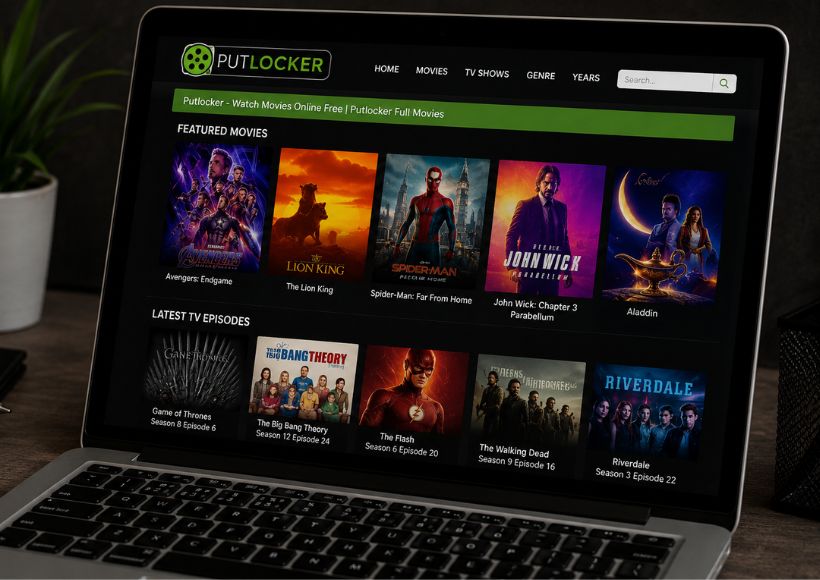
Its interface was surprisingly simple.
Search.
Select.
Play.
Whether it was intentionally designed that way or simply a result of an earlier web era, the experience felt lightweight compared to many modern clone websites.
This difference matters because websites are remembered emotionally. Users rarely remember server infrastructure—they remember whether a website felt easy to use.
The Streaming Industry Changed Faster Than Users Expected
When Putlocker became popular, subscription streaming looked very different. Netflix was growing rapidly, Disney+ didn’t exist, Max hadn’t launched, Apple TV+ was still years away, and regional streaming platforms were only beginning to emerge.
As more companies entered the market, the number of exclusive content libraries increased dramatically.
From a business perspective, exclusivity makes sense. From a user’s perspective, however, it creates fragmentation.
Today, a single household may need multiple subscriptions to access content that was once available through a single searchable ecosystem.
Ironically, while legal streaming expanded, content discovery became more complicated.
This explains why the Putlocker brand still appears in search results years after the original platform disappeared.
Many of those searches are really asking one simple question:
“Where can I find this movie without checking five different apps?”
The Psychology Behind Putlocker Searches
Search behavior often tells a deeper story than keywords alone.
Someone searching:
Putlocker 2026
isn’t necessarily expecting the original website to return.
Instead, they may be looking for:
- An easier way to find a movie,
- Confirmation that an old bookmark still works,
- A replacement for a familiar experience,
- Or simply hoping the platform has somehow returned.
Psychologists call this familiarity bias.
People naturally return to names they already recognize.
Even when they know something has changed, the familiar option feels easier than learning something entirely new.
This is one reason discontinued brands continue generating search traffic years after they disappear.
A Timeline That Explains More Than Dates
Most timelines simply list shutdowns.
A more useful timeline explains why each event mattered.
|
Year |
What Happened |
Why It Mattered |
|
2011 |
Putlocker launched in the UK. |
Introduced an easy way to discover movies online. |
|
2012 |
Traffic surged after Megaupload shut down. |
Millions of users looked for alternative streaming options. |
|
2014 |
Domain seizures forced multiple address changes. |
Users learned that domains could disappear overnight. |
|
2016 |
ISP blocks expanded in several regions. |
Access increasingly depended on location. |
|
Late 2016 |
Original service became unavailable. |
Numerous unrelated clone sites adopted the Putlocker name. |
|
2017–Present |
Mirror sites continued appearing and disappearing. |
The brand survived even though the original service did not. |
Notice something interesting.
The website disappeared.
The brand didn’t.
That distinction explains why Putlocker remains part of internet culture today.
The Legacy Isn’t the Website—It’s the User Experience
When historians eventually look back at the first generation of streaming websites, Putlocker won’t be remembered solely for its technology.
It will be remembered because it highlighted something users continue asking for:
- One search,
- One catalog,
- Minimal friction,
- And quick access to information.
Modern streaming platforms have become safer, more reliable, and fully licensed, but they have also introduced a level of fragmentation that many viewers find frustrating.
Understanding why Putlocker became so widely recognized isn’t about celebrating piracy. It’s about recognizing a content discovery gap that the entertainment industry is still trying to solve.
How Putlocker Actually Worked (And Why Most People Misunderstood It)
One of the biggest misconceptions about Putlocker is that it stores every movie on its own servers. While the exact implementation varied over time, the platform generally functioned more like a content index than a traditional streaming service. It gathered links to videos hosted on third-party servers and presented them through a simple interface.
For users, the experience felt seamless. They searched for a title, clicked “Play,” and watched a movie. Behind the scenes, however, the content often originated from different hosting providers.
This distinction explains why the website could grow quickly. Instead of investing heavily in massive storage infrastructure for every film, the platform relied on a distributed ecosystem of file hosts and streaming sources.
That model also made the service fragile. If a hosting provider removed a file or received a copyright complaint, the movie disappeared instantly. Operators constantly had to replace broken links, update sources, and manage changing domains.
In many ways, Putlocker functioned more like a search engine for streaming links than a conventional video platform.
Why Did Mirror Sites Become Worse Over Time?
Many people who used Putlocker years ago say the original experience felt simple, while today’s mirror sites are filled with advertisements, redirects, fake download buttons, and browser notifications.
This isn’t just nostalgia.
The business model changed.
The original brand attracted enormous traffic and recognition. After it disappeared, hundreds of unrelated operators began using the Putlocker name to attract visitors searching for a familiar website.
Unlike the original service, these clone sites often had no long-term reputation to protect. Their goal was frequently to generate as much revenue as possible before the domain was blocked, abandoned, or replaced.
That created a different economic incentive.
Instead of improving user experience, many mirror operators focused on maximizing advertising impressions, affiliate commissions, and referral traffic. The result was an internet filled with websites that looked similar but delivered a much poorer experience.
This explains why users often say, “It doesn’t feel like the old Putlocker.”
They are usually comparing two completely different businesses that happen to share the same name.
Why Do Mirror Domains Keep Changing?
One question appears repeatedly in online communities:
“Why does Putlocker keep changing its domain?”
The answer is straightforward.
A domain name is simply an Internet address.
When copyright complaints, hosting issues, legal action, or business decisions affect a website, operators sometimes register a new domain and redirect users there.
Over time, this created an endless cycle:
- A domain becomes popular.
- It receives legal complaints or technical issues.
- Traffic declines or access is restricted.
- A new domain appears.
- Users search for the latest working address.
- The process repeats.
Eventually, the brand becomes more recognizable than any individual website. This is why many people search for “Putlocker” rather than remembering a specific domain name.
The Hidden Cost of “Free” Streaming
People often say, “If it’s free, someone else is paying.”
On the internet, that’s usually true.
Running a streaming website involves real expenses:
- Servers
- Bandwidth
- Storage
- Domain registration
- Technical maintenance
- DDoS protection
- Customer support (for legitimate platforms)
Legal streaming services recover these costs through subscriptions or advertising.
Unofficial streaming sites often rely on different revenue sources, including aggressive advertising, pop-up networks, affiliate programs, or deceptive redirects.
This doesn’t mean every unofficial site behaves the same way, but it explains why intrusive advertisements became increasingly common across many clone websites.
Understanding the economics helps explain why the user experience changed over time.
Why Users Remember Putlocker More Than Other Sites
Interestingly, the internet history is full of piracy websites.
Yet relatively few names remain recognizable years later.
Why?
Because people don’t remember technology. They remember experiences. Putlocker became memorable because it reduced friction.
The fewer decisions users had to make, the more likely they were to return. This principle is now widely used by legitimate companies as well.
Streaming platforms invest millions of dollars in improving search, recommendations, watchlists, resume playback, and personalized homepages because convenience directly influences user loyalty.
In that sense, Putlocker demonstrated an important lesson long before streaming became mainstream:
People value simplicity.
What Today’s Streaming Industry Can Learn
The legacy of Putlocker isn’t a recommendation to copy its business model. Instead, it highlights several user experience lessons that remain relevant today.
1. Discovery matters as much as content
Users often spend more time searching for something to watch than actually watching it.
A platform with an excellent search experience can feel more valuable than one with a larger library but poor navigation.
2. Fragmentation creates frustration
Exclusive licensing benefits content owners, but it also forces viewers to check multiple services before finding a movie.
The more fragmented streaming becomes, the more valuable unified discovery tools become.
3. Speed influences satisfaction
People associate fast-loading websites with reliability.
Whether watching a film, reading the news, or shopping online, performance shapes trust.
4. Simplicity builds loyalty
Minimal design, intuitive navigation, and fewer interruptions create better user experiences than cluttered interfaces.
The Future Isn’t Another Putlocker
Many people continue searching for “the next Putlocker.”
They’re asking the wrong question.
The future of streaming is unlikely to be another website that copies the past. Instead, the industry is moving toward smarter discovery. Artificial intelligence is beginning to recommend content across multiple platforms.
Universal search tools help users identify where a movie is legally available. Streaming providers increasingly partner with aggregators, reducing the need to search each service individually.
In other words, the problem Putlocker appeared to solve—finding content quickly—is now being addressed through legitimate technology rather than unofficial distribution.
Final Thoughts
Putlocker’s story is often told as a legal battle over copyright.
That history is important, but it isn’t the whole story.
Its lasting influence comes from something more practical.
It exposed a weakness in online entertainment that still exists today: finding the right content should be easier than it is.
The original website disappeared years ago, yet its name remains part of internet culture because it became associated with convenience, simplicity, and instant discovery.
For readers, the real lesson isn’t whether Putlocker still works.
It’s understanding why millions of people embraced a platform that simplified a fragmented entertainment landscape—and why today’s streaming services continue trying to solve the same challenge in legal, secure, and increasingly innovative ways.
